Few states in India offer a pilgrimage as rich and varied as Gujarat. On one trip you can stand before the first of the twelve Jyotirlingas at Somnath, watch the flag change above Lord Krishna’s temple in Dwarka, climb a mountain of Jain temples at Palitana and pray at Shakti Peeths on the hills of Ambaji and Pavagadh. This guide explains the main temples, how to group them into practical routes, what to expect at darshan, and how to plan a comfortable journey for every generation of the family.
Why Gujarat is special for a temple journey
Gujarat is woven into the stories of Lord Krishna and Lord Shiva, and its temples are among the most revered in India. Somnath and Nageshwar are two of the twelve Jyotirlingas, Dwarka is one of the four Char Dham, and the state has several important Shakti Peeths. It is also the heart of Jain pilgrimage, with the temple cities of Palitana and Girnar.
What makes a Gujarat temple tour special is the variety. You travel along the Arabian Sea coast, up sacred hills and through quiet villages, and between temples you see some of India’s finest architecture — from the carved sandstone of Somnath to the 11th-century Sun Temple at Modhera. Roads are generally good, distances manageable and vegetarian food easy to find everywhere.
Three temple circuits in Gujarat
- The Saurashtra coast (5 to 8 days): Dwarka, Nageshwar, Bet Dwarka, Porbandar and Somnath, often with Junagadh and Girnar. This is the classic Gujarat pilgrimage.
- The Shakti circuit (4 to 6 days): Ambaji, Bahucharaji, Pavagadh and Chotila, sometimes with Modhera and Akshardham. Ideal around Navratri — though very crowded then.
- The Jain circuit (3 to 5 days): Palitana’s Shatrunjaya hill, Girnar and Taranga, often combined with Bhavnagar.
Most families start with the Saurashtra coast and add a second circuit on a later trip. Trying to cover all of Gujarat in a week means long hours in the car and rushed darshan.
Somnath Temple
Somnath, at Prabhas Patan near Veraval, is honoured as the first of the twelve Jyotirlingas. Its history of being destroyed and rebuilt many times over the centuries gives it deep meaning for devotees. The present temple, in the Chaulukya style of finely carved sandstone, was completed after Independence and stands right on the shore.
Aarti is usually performed in the early morning, at noon and in the evening, and the evening aarti — with conch shells, drums and the sea behind — is unforgettable. After dark, a light and sound show tells the story of the temple. Near the sea wall, the Baan Stambh (arrow pillar) carries an inscription noting that there is no land in a straight line between this spot and the South Pole.
Phones, cameras and bags are not allowed inside; deposit them at the counters before joining the queue.
Triveni Sangam, Bhalka Tirth and Gita Mandir
Keep half a day for the sacred sites around Somnath. At Triveni Sangam, the Hiran, Kapila and Saraswati rivers meet before reaching the sea, and pilgrims take a holy dip at the ghats. Bhalka Tirth, a few kilometres away, is revered as the place where Lord Krishna was struck by a hunter’s arrow, and the area around Dehotsarg and the Gita Mandir marks where he is believed to have left his mortal body.
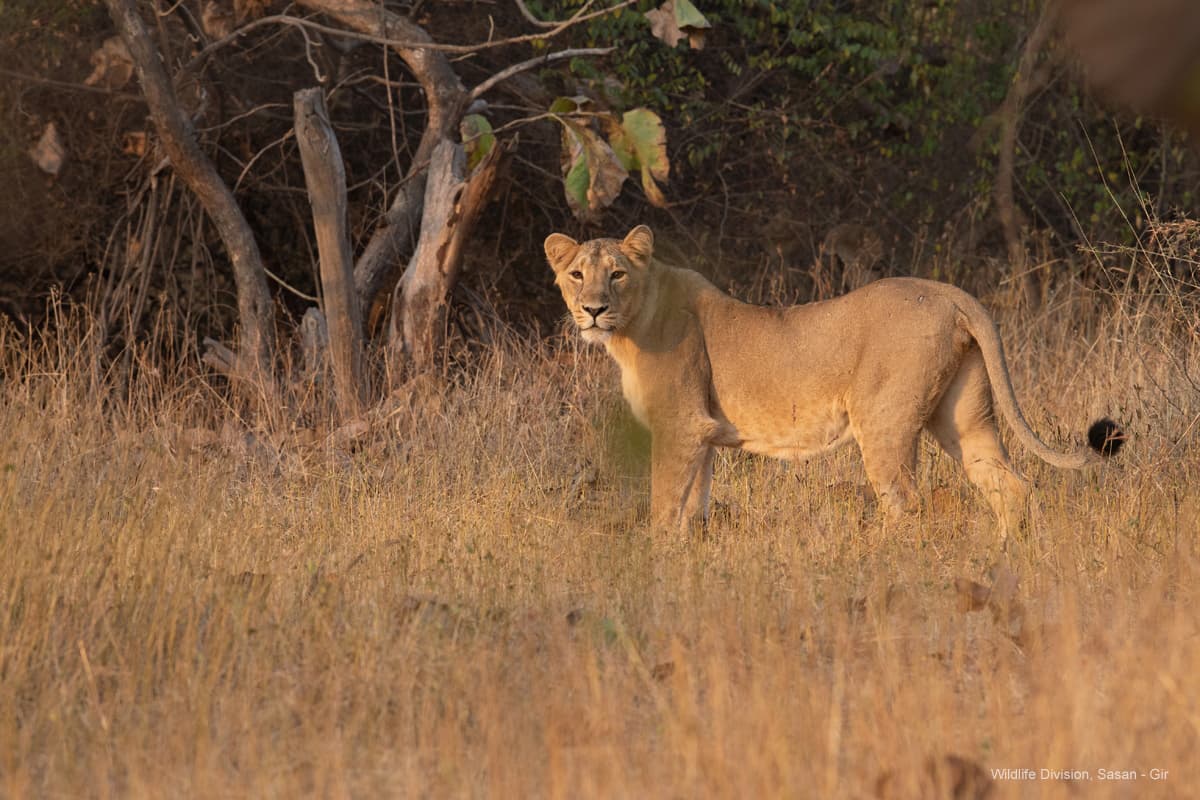
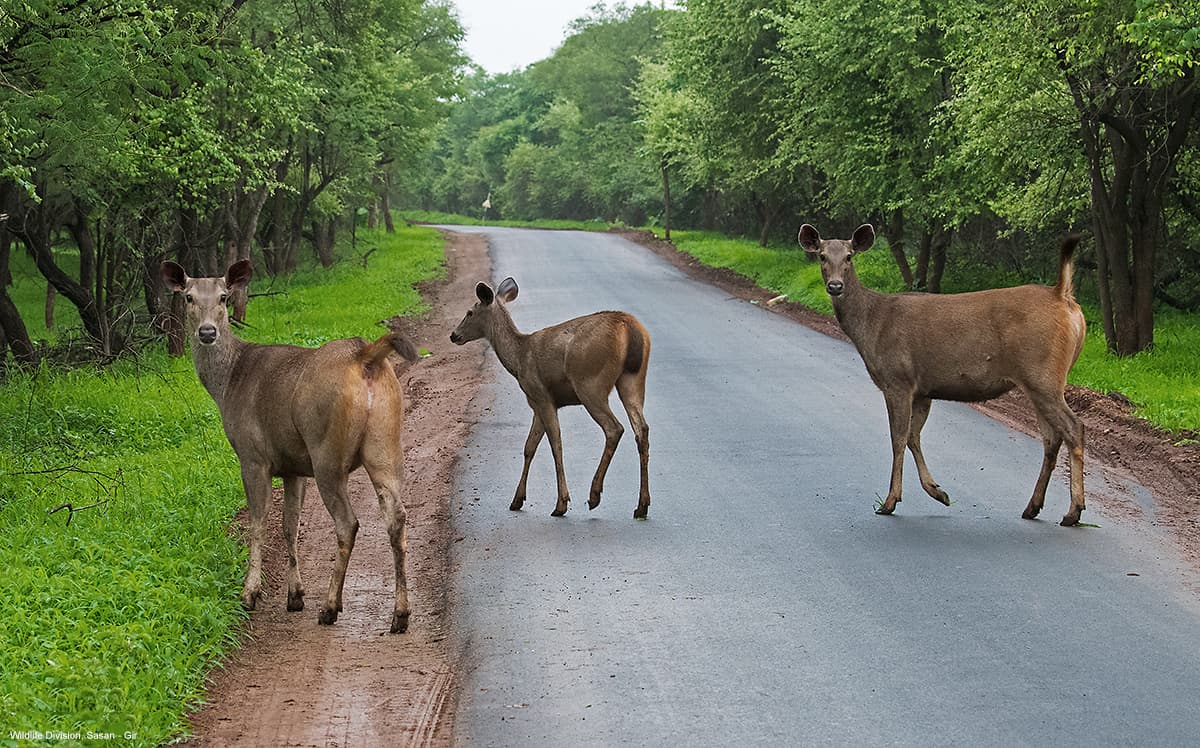
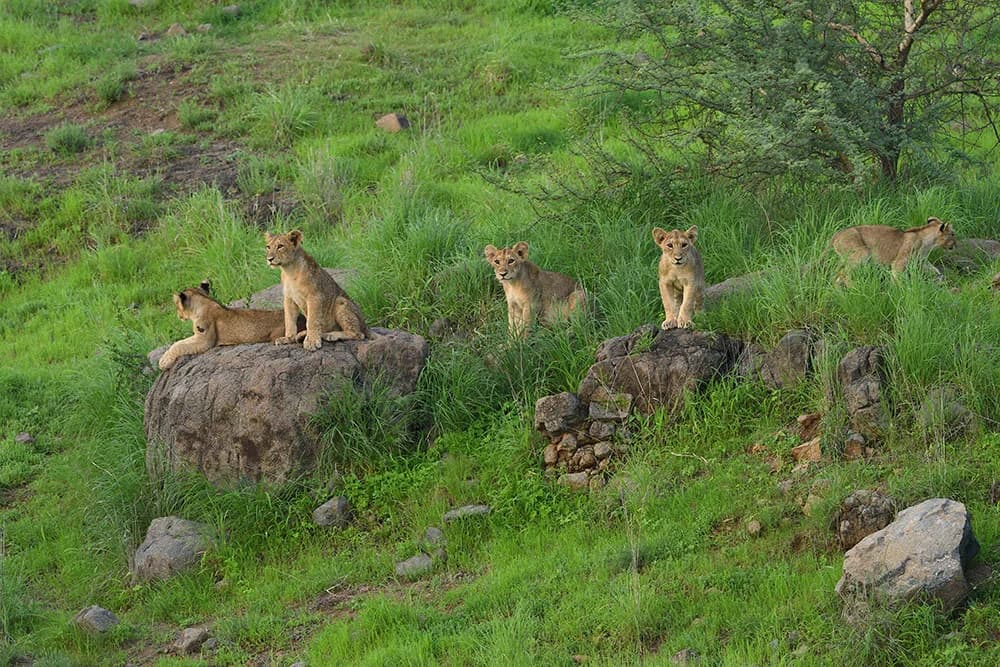
The Prabhas Patan Museum displays carvings and remains of earlier temples. Somnath is also only an hour from Sasan Gir, so many families add a lion safari — see our Sasan Gir safari guide.
Dwarkadhish Temple, Dwarka
Dwarka, on the western tip of Saurashtra, is revered as the kingdom of Lord Krishna and is one of the four Char Dham. The Dwarkadhish Temple (Jagat Mandir) rises five storeys above the town on carved pillars, and its tall spire carries a huge flag that is changed several times every day — families sponsor the flag, and each change is a moment of celebration.
Pilgrims usually enter through the Swarg Dwar from the market side and leave through the Moksha Dwar, which leads down steps to the Gomti ghat, where the Gomti river meets the sea. The temple opens early for mangla aarti and usually closes for a few hours in the afternoon before reopening for evening darshan, so plan your visit around these breaks.
Phones and cameras are generally not permitted inside; lockers are available nearby.
Nageshwar Jyotirlinga and Gopi Talav
About 15 to 20 km from Dwarka, on the road to Okha, the Nageshwar Jyotirlinga is another of Shiva’s twelve sacred shrines. The temple is recognisable from afar by the large seated statue of Lord Shiva in its grounds. Inside, the lingam is in an underground sanctum, and devotees often offer abhishek here.
On the same road, Gopi Talav is a small pond associated with the gopis’ devotion to Krishna, known for its soft yellow clay (gopi chandan). Together with the Rukmini Devi Temple, a beautifully carved shrine to Krishna’s consort just outside Dwarka, these temples are usually visited in a single half-day loop.
Bet Dwarka and Sudarshan Setu
Bet Dwarka is an island off the port town of Okha, believed to be where Lord Krishna lived. Its main temple, along with smaller shrines across the island, draws pilgrims throughout the year.
For generations, the only way across was by crowded ferry boat. Since 2024, the Sudarshan Setu — a long cable-stayed bridge — has linked Okha with the island, making the trip far easier for elderly pilgrims and families. The views of the sea and fishing boats from the bridge are lovely.
Combine Bet Dwarka with Nageshwar and Gopi Talav on the same day. If you have time, the clean, quiet Shivrajpur beach between Dwarka and Okha is a peaceful spot for the evening.
Porbandar, Madhavpur and Harsiddhi
The coastal road between Dwarka and Somnath passes several meaningful stops. Porbandar is the birthplace of Mahatma Gandhi; Kirti Mandir, built beside his ancestral home, lets you walk through the rooms where he was born. Porbandar also has the Sudama temple, honouring Krishna’s childhood friend.
Further along, Madhavpur has the Madhavrai temple and a long, clean beach, and hosts a colourful spring fair celebrating the wedding of Krishna and Rukmini. Near Porbandar, the Harsiddhi Mata temple on a hill above the sea is another popular halt.
These stops break up the four- to five-hour drive between Dwarka and Somnath nicely.
Girnar and Junagadh
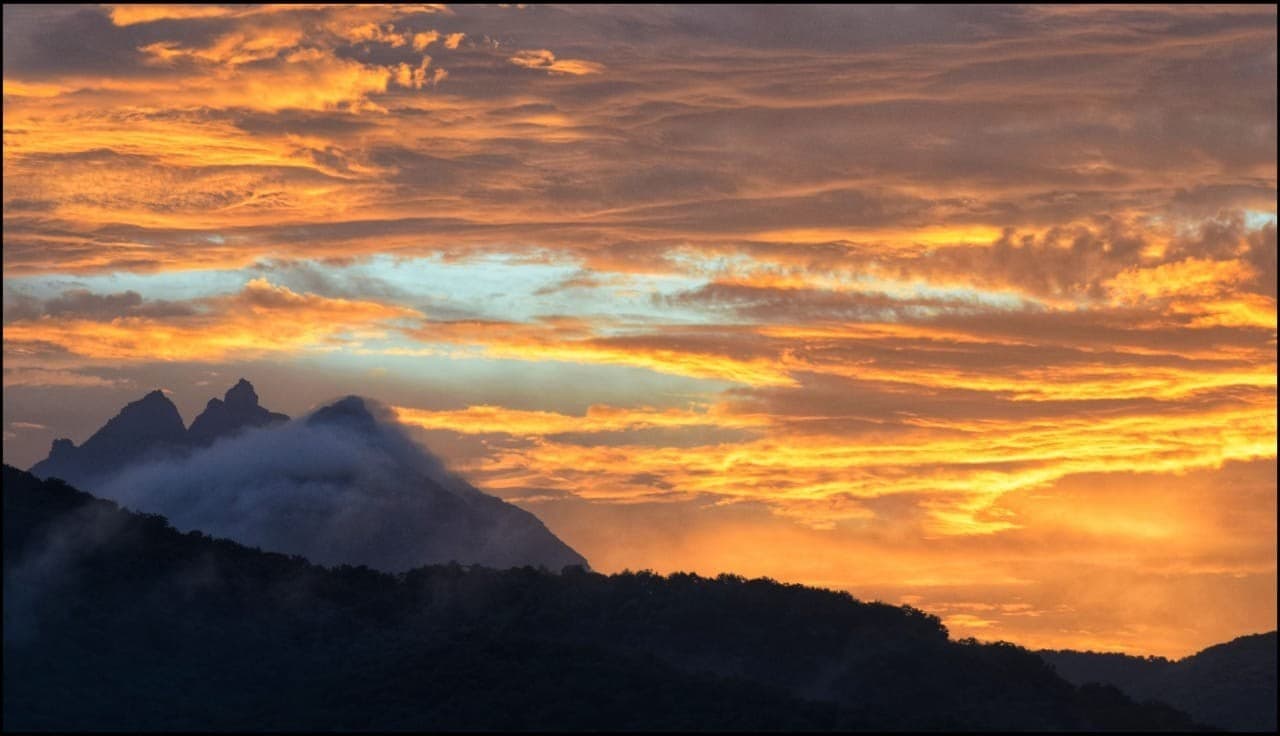
Girnar, rising above Junagadh, is sacred to both Hindus and Jains. A stone stairway of around ten thousand steps leads past ancient Jain temples, including the shrine of Neminath, to the Amba Mata temple and on to the Dattatreya peak. Many pilgrims begin the climb before dawn.
The Girnar ropeway now carries visitors from the foothills to the Amba Mata temple area in minutes, making the mountain accessible to older travellers and families. At the foot of the hill, Bhavnath Mahadev is the centre of the great Mahashivratri fair, and in the month of Kartik lakhs of pilgrims walk the Lili Parikrama around the mountain.
Junagadh itself has Uparkot fort, ancient step-wells and Ashoka’s rock edicts — worth a half-day between temples.
Virpur, Chotila and the Rajkot region
On the way between Ahmedabad and Saurashtra, a few temples are easy to fit in. Chotila, beside the highway, has the Chamunda Mata temple on a hilltop reached by several hundred steps, with wide views over the plains.
Near Gondal, the village of Virpur is home to the temple of the saint Jalaram Bapa, known across Gujarat for his tradition of feeding everyone who came to his door. The temple is famous for serving prasad to all visitors and, for many years now, for not accepting donations.
Rajkot is a convenient overnight halt for these stops, with good hotels and connections to Dwarka, Somnath and Junagadh.
Ambaji and Gabbar hill
In the Aravalli hills near the Rajasthan border, Ambaji is one of the most important Shakti Peeths in India. Uniquely, there is no idol in the main shrine — devotees worship the sacred Visa Shri Yantra, which is adorned so that it appears as the goddess.
Nearby, Gabbar hill is believed to be the original seat of the goddess. Pilgrims climb its steps or take the ropeway to the shrine at the top, where an evening aarti is held. The temple town is busiest during Navratri and the Bhadarvi Poonam fair, when huge numbers of devotees walk to Ambaji from across Gujarat.
Ambaji is roughly four hours from Ahmedabad, and many pilgrims combine it with Bahucharaji, Modhera and Patan.
Pavagadh and Champaner
About two and a half hours from Ahmedabad, Pavagadh hill rises steeply from the plains, crowned by the Kalika Mata temple, a revered Shakti Peeth. A road climbs part of the way, and a ropeway carries pilgrims most of the remaining distance, followed by a final flight of steps.
At the foot of the hill, Champaner holds the ruins of a 15th-century capital, with beautiful stone mosques, gateways and step-wells. Together they form the Champaner-Pavagadh Archaeological Park, a UNESCO World Heritage Site.
Pavagadh is extremely crowded during Navratri and on Sundays and holidays — go on a weekday morning if you can.
Modhera Sun Temple, Rani ki Vav and Bahucharaji
The Modhera Sun Temple, built in the early 11th century under the Chaulukya dynasty, is one of the finest examples of Gujarati temple architecture. It is no longer an active place of worship, but its carved halls and the great stepped tank, Surya Kund, lined with small shrines, are breathtaking. A classical dance festival is held here in January.
About 35 km away, Rani ki Vav in Patan is a magnificent step-well carved with hundreds of sculptures and is a UNESCO World Heritage Site. Patan is also famous for its handwoven Patola silk.
Nearby Bahucharaji is an important Shakti Peeth. These three fit comfortably into a day trip from Ahmedabad.
Akshardham and Adalaj
In Gandhinagar, the Swaminarayan Akshardham complex is built of carved pink sandstone set in landscaped gardens. Exhibitions inside explain Hindu culture and values, and an evening water and light show is popular with families. Phones and bags are not allowed inside; use the cloakroom.
On the way, the Adalaj step-well is one of the most beautiful in Gujarat, with five storeys of carved pillars and galleries descending to cool water. It takes less than an hour to see and is a peaceful contrast to the busy temples.
These two are perfect for your first or last day in Ahmedabad.
Palitana and the Shatrunjaya hill
Palitana, near Bhavnagar, is one of the holiest places in Jainism. The Shatrunjaya hill above the town is covered with hundreds of marble temples, built over many centuries, and reached by a stone stairway of more than three thousand steps.
Pilgrims start climbing before dawn to avoid the heat, and the climb takes around two hours at a steady pace. Dolis (chairs carried by porters) are available for those who cannot climb. Food is not allowed on the hill, and everyone must come down before evening, as the hill is considered the abode of the gods at night. The hill is usually closed to climbing during the monsoon months.
Dress modestly and remove leather items before entering the temples.
Kutch: Mata no Madh, Narayan Sarovar and Koteshwar
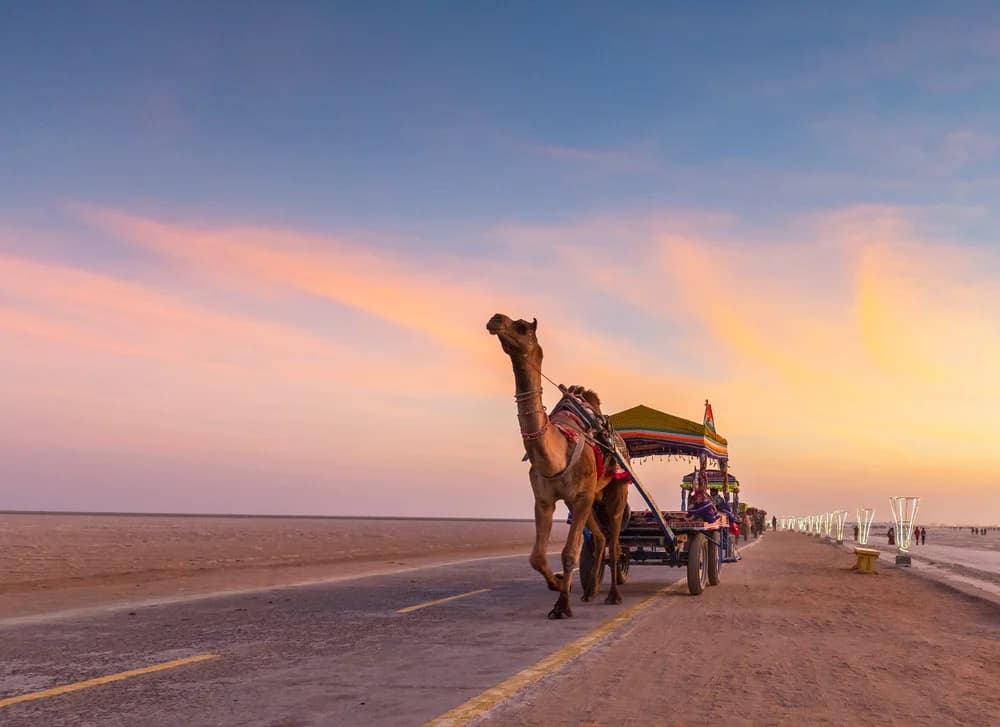
If you have extra days, Kutch adds a very different flavour to a pilgrimage. Mata no Madh is the seat of Ashapura Mata, the family deity of many communities in Kutch, and draws large crowds during Navratri.
In the far west, Narayan Sarovar is one of the five sacred lakes of Hinduism, and nearby Koteshwar Mahadev stands at the edge of the sea near the border, with sweeping views over the creek.
Kutch is also home to the white salt desert of the Rann, rich handicrafts and the Rann Utsav in winter, so it makes a memorable extension for families who enjoy culture as well as darshan.
An 8-day Gujarat temple tour itinerary
- Day 1 — Ahmedabad: arrive; evening at Akshardham or the Sabarmati riverfront.
- Day 2 — Ahmedabad to Dwarka: long drive west, with a stop at Chotila or Rajkot. Evening darshan at Dwarkadhish.
- Day 3 — Dwarka: mangla aarti, then Nageshwar, Gopi Talav, Rukmini temple and Bet Dwarka via Sudarshan Setu.
- Day 4 — Dwarka to Somnath: via Harsiddhi, Porbandar and Madhavpur. Evening aarti and light show at Somnath.
- Day 5 — Somnath to Bhavnagar: morning at Triveni Sangam and Bhalka Tirth, then drive east.
- Day 6 — Palitana: early climb of Shatrunjaya hill, rest in the afternoon.
- Day 7 — Bhavnagar to Ahmedabad: local temples in Bhavnagar, then return.
- Day 8 — Departure: Adalaj step-well on the way to the airport or station.
Best time and major festivals
October to March is the most comfortable time for a temple tour, with pleasant days for long drives and climbs. April to June is very hot, especially on the coast and in Kutch; start early and rest in the afternoons. The monsoon is green and quieter, though Palitana’s hill is usually closed for climbing.
Major festivals bring a special atmosphere — and very large crowds:
- Janmashtami at Dwarka and Bet Dwarka.
- Mahashivratri at Somnath and the Bhavnath fair at Girnar.
- Kartik Purnima fair at Somnath.
- Navratri at Ambaji, Pavagadh, Bahucharaji and Mata no Madh.
- Bhadarvi Poonam at Ambaji.
If you want to be part of a festival, book hotels and transport months ahead and expect long darshan queues.
Travelling with elderly parents
A temple tour is often a family journey, and with a little planning it can be comfortable for older travellers too.
- Use the ropeways at Girnar, Pavagadh and Ambaji’s Gabbar hill instead of the steps.
- Book dolis at Palitana for those who cannot climb.
- Choose hotels close to the temples in Dwarka and Somnath, so early aarti does not mean a long drive.
- Avoid festival days and weekends, when queues can last hours.
- Ask about wheelchair access at larger temples, and carry a folding stool for long queues where allowed.
- Keep drives short — no more than five to six hours a day with regular breaks.
Food on a Gujarat temple tour
Gujarat is one of the easiest states in India for vegetarian and Jain travellers. Temple towns serve pure vegetarian food, and many places offer Jain meals without onion, garlic or root vegetables — just ask.
Try a full Gujarati or Kathiyawadi thali, with rotla, shaak, kadhi, khichdi and sweets, and the morning favourites of fafda-jalebi and thepla. Many temples serve prasad or simple community meals, and the bhojanalayas run by temple trusts and dharamshalas are clean, affordable and welcoming.
Gujarat temple tours with Prakriti Escapes
Our Temple Tour of Gujarat covers Ahmedabad, Dwarka, Somnath and Bhavnagar over eight days, and our Divine Shakti Trails package focuses on Ambaji, Pavagadh, Chotila and Girnar. Both include hotels, a cab with driver and sightseeing, and can be adjusted for elderly travellers, festival dates or extra temples.
Share your dates, starting city and the temples that matter most to your family on WhatsApp, and we will plan a route with comfortable drives and well-timed darshan.
Experiences & trips in Pilgrimage

Frequently asked questions
How many days are needed for a Gujarat temple tour?
Seven to eight days covers Dwarka, Nageshwar, Bet Dwarka, Somnath and Palitana comfortably by road. A shorter five- to six-day trip can focus on Dwarka and Somnath, while the Shakti circuit of Ambaji and Pavagadh needs another four to five days.
What is the distance between Dwarka and Somnath?
Roughly 230–240 km along the coast, about four to five hours by road. Porbandar, Madhavpur and Harsiddhi make good stops on the way.
Are mobile phones allowed in Somnath and Dwarkadhish temples?
Phones, cameras and bags are generally not allowed inside these temples. Deposit counters and lockers are available near the entrances.
Is there a dress code for Gujarat temples?
There is no strict uniform, but modest clothing that covers shoulders and knees is expected. Some Jain temples ask visitors to remove leather items such as belts and wallets.
How do I reach Bet Dwarka?
Bet Dwarka is connected to Okha by the Sudarshan Setu bridge, opened in 2024. Okha is about 30 km from Dwarka, so Bet Dwarka is usually combined with Nageshwar and Gopi Talav in a half-day trip.
Is there a ropeway at Girnar, Pavagadh and Ambaji?
Yes. Ropeways at Girnar, Pavagadh and Gabbar hill near Ambaji make these hill temples accessible to older travellers and families. Expect queues on weekends and festival days.
Which is the best time for a Gujarat temple tour?
October to March has the most comfortable weather. Festivals such as Janmashtami in Dwarka, Mahashivratri in Somnath and Navratri at Ambaji and Pavagadh are special but extremely crowded.
Can I combine a temple tour with a Gir lion safari?
Yes. Sasan Gir is only about an hour from Somnath, so many families add one or two nights for a jungle safari or a Devalia drive between temple visits.
Is Palitana open all year?
The Shatrunjaya hill is usually closed to climbing during the monsoon months. Outside that period, pilgrims climb from early morning and must come down before evening.
- #gujarat temple tour
- #somnath
- #dwarka
- #nageshwar jyotirlinga
- #ambaji
- #pilgrimage in gujarat
Written by
Prakriti Escapes Editorial
Prakriti Escapes is a private travel company from Surat, Gujarat. We arrange safaris, stays and trips — and write these guides from the questions our guests ask us most.
Updated 14 Oct 2026
Travel desk
Planning this trip?
Share your dates — we check availability and send options.