Quick answer
What are the best places to visit near Sasan Gir?
The most popular are Somnath temple, Junagadh with Uparkot fort, Mahabat Maqbara and the Girnar ropeway, Diu, Devalia Safari Park, Tulsishyam and Satadhar. Ambardi and the Girnar Nature Safari make a good second safari. This guide gives distances, timings and a sample plan around Sasan Gir.
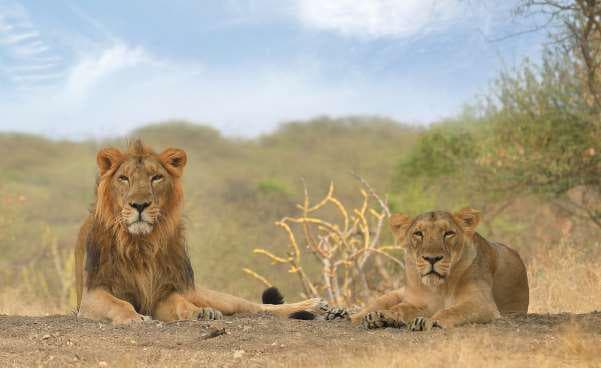
Most people come to Sasan Gir for the lions, but the forest sits in the middle of one of the richest corners of Gujarat. Within a two- or three-hour drive you have a Jyotirlinga temple on the sea, a hill of ten thousand steps, a Portuguese island fort, hot springs in the forest and miles of quiet coastline. This guide covers the places worth adding to your Gir trip, how far each one is, how much time to keep, and how to fit them together without spending your whole holiday in a car.
Devalia Safari Park and the crocodile centre
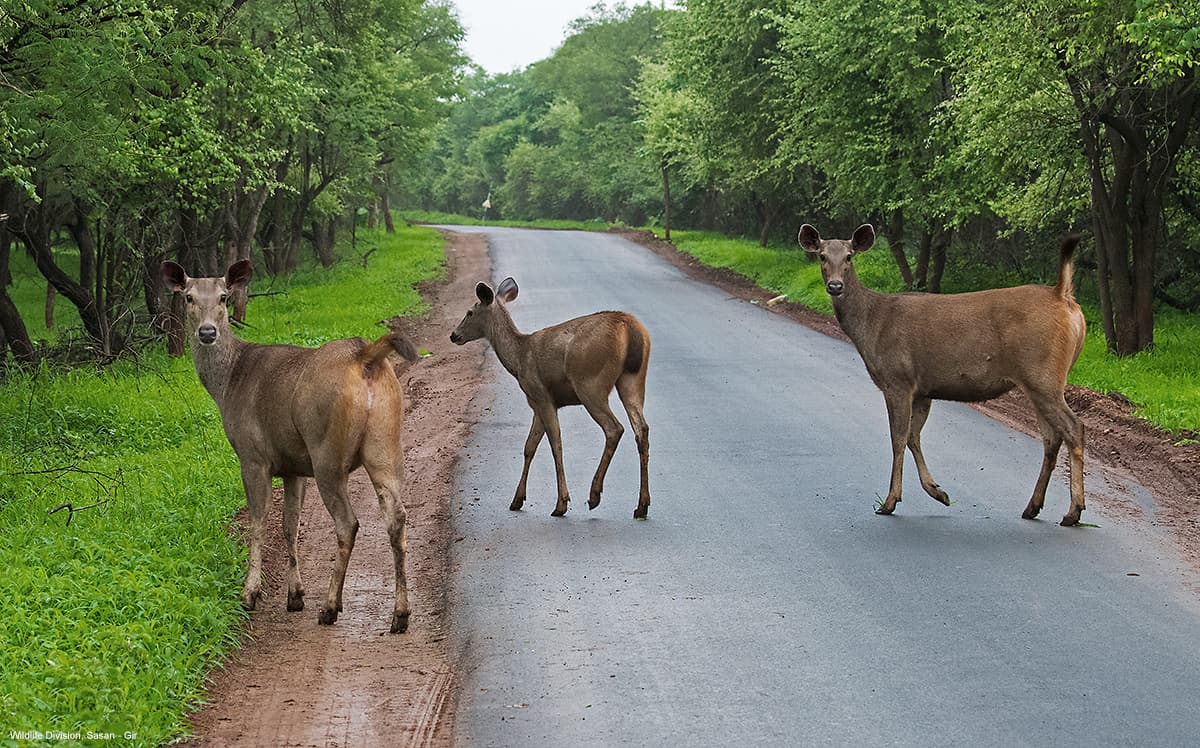
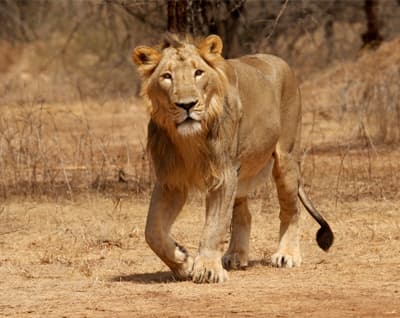
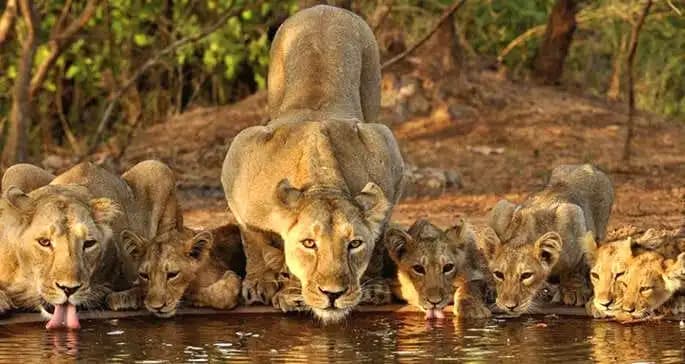
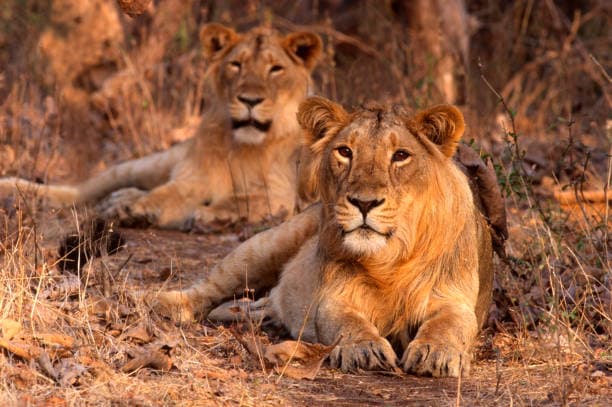
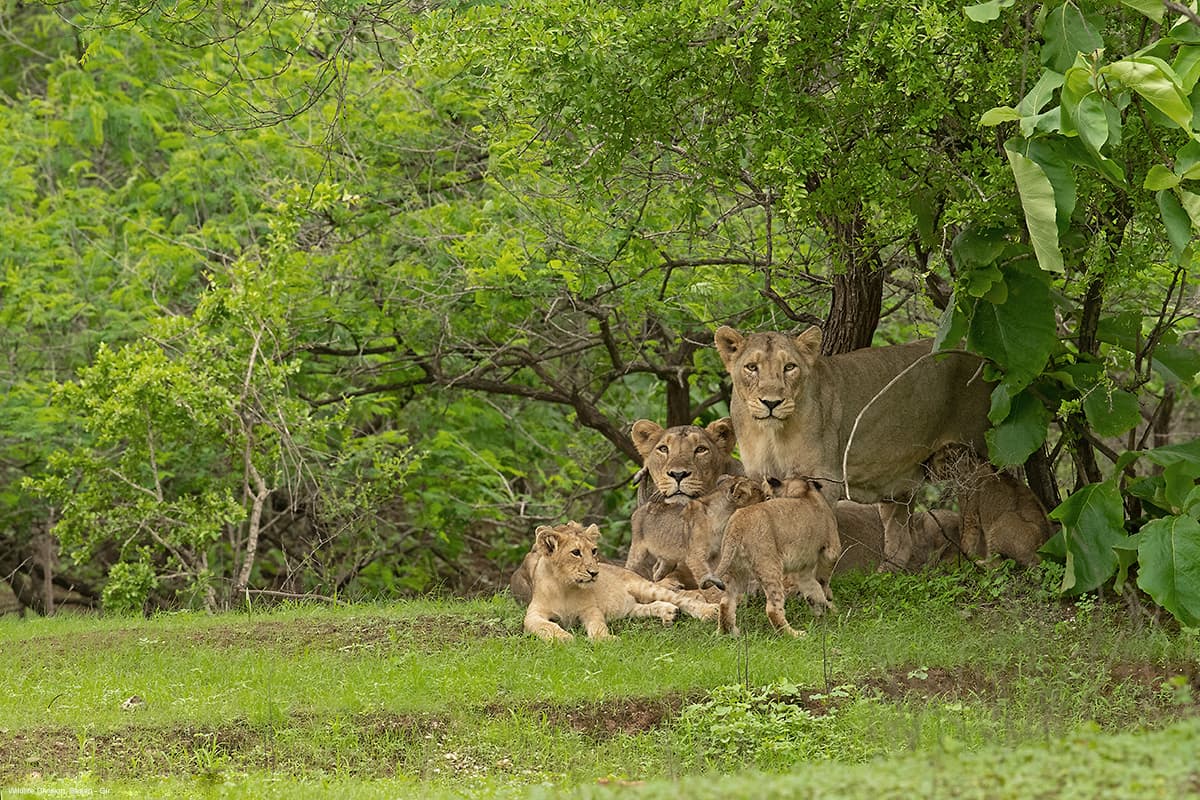
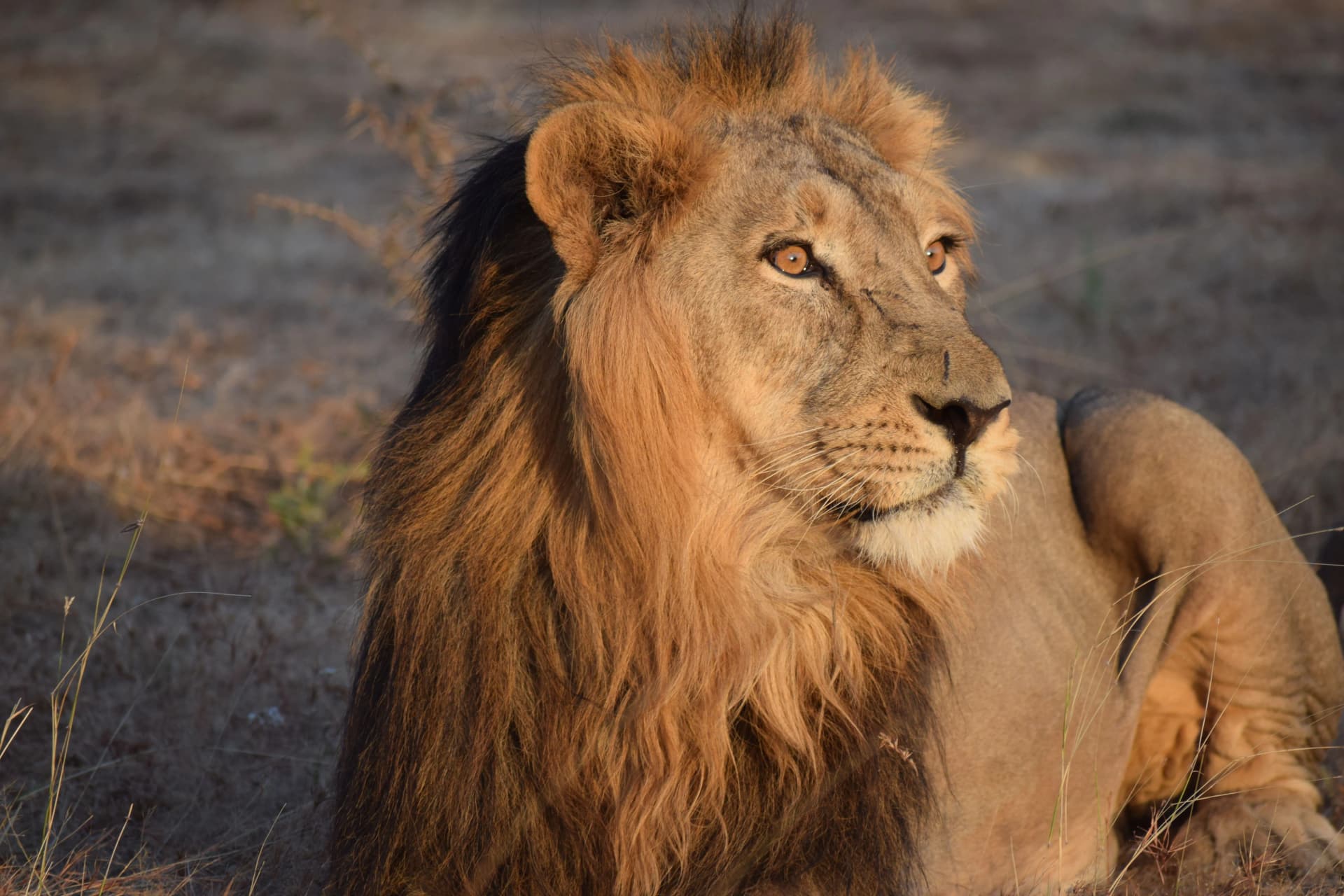
If you have only one free afternoon in Sasan, spend it at Devalia Safari Park, the fenced Gir Interpretation Zone about 20 to 25 minutes from the village. The drive is short — under an hour in a Gypsy — and because the area is compact, it gives a good chance of seeing lions even if your jungle trail was quiet. It also runs during much of the monsoon, when the core forest is closed.
Back in Sasan, the small crocodile breeding centre near the safari reception is a quick, easy stop, especially with children. Marsh crocodiles live in the rivers and reservoirs of Gir, and the centre has played a part in returning young crocodiles to the wild.
Somnath Temple
Somnath is honoured as the first of the twelve Jyotirlingas of Lord Shiva and is one of the most important pilgrim sites in India. The temple stands right on the shore at Prabhas Patan, and its story of being destroyed and rebuilt many times over the centuries is part of its meaning for devotees. The present temple, built in the classic Chaulukya style with finely carved sandstone, was completed in the years after Independence.
Try to be there for the evening aarti, when the temple is lit up and the sound of conch shells and bells carries over the sea. The light and sound show after dark tells the temple’s history. Mobile phones, cameras and bags are not allowed inside, so use the deposit counters near the entrance.
Somnath is about an hour from Sasan, so you can visit after a morning safari and be back for dinner — or stay a night by the sea.
Triveni Sangam, Bhalka Tirth and Prabhas Patan
Keep an extra hour or two for the sacred sites around Somnath. Triveni Sangam, where the Hiran, Kapila and Saraswati rivers meet before reaching the sea, has bathing ghats and is a peaceful place at sunrise. Bhalka Tirth, a few kilometres away, is revered as the place where Lord Krishna was struck by a hunter’s arrow, and Dehotsarg near the Sangam marks where he is believed to have left his mortal body.
The Prabhas Patan Museum holds carvings and fragments from earlier temples on the site and helps you understand how many times Somnath has been rebuilt. In the evening, the sea-facing promenade near the temple is a pleasant place to walk before the aarti.
Junagadh: Uparkot Fort and the old city
Junagadh is one of the most historic towns in Gujarat, and it is about an hour and a half from Sasan. At its heart is Uparkot Fort, a hilltop citadel with very old foundations. Inside you can explore two remarkable step-wells — Adi Kadi Vav, cut deep into the rock, and Navghan Kuvo with its spiral stairway — along with ancient Buddhist rock-cut caves.
In the old city, the Mahabat Maqbara is a striking 19th-century mausoleum with silver-grey domes, spiral staircases and intricate carving that mixes Indo-Islamic and European styles. On the road towards Girnar, a large boulder carries the rock edicts of Emperor Ashoka, inscribed more than two thousand years ago. Junagadh is also home to the Sakkarbaug Zoo, which has long been part of the breeding programme for Asiatic lions.
Bhavnath, Damodar Kund and the Darbar Hall Museum
At the foot of Girnar, the Bhavnath Mahadev temple is the gathering point for sadhus and pilgrims, and the starting point of the great Mahashivratri fair. Nearby, Damodar Kund is a sacred tank in a forested valley where pilgrims take a dip before climbing the mountain.
Back in town, the Darbar Hall Museum in the old palace of the Nawabs displays royal portraits, palanquins, weapons, silver and textiles from Junagadh’s princely past. It is a good, shaded stop in the hot middle of the day.
If you want to see everything in Junagadh at a relaxed pace — fort, mausoleum, edicts, museum and Girnar — keep a full day and stay the night in town.
Girnar hill and the ropeway
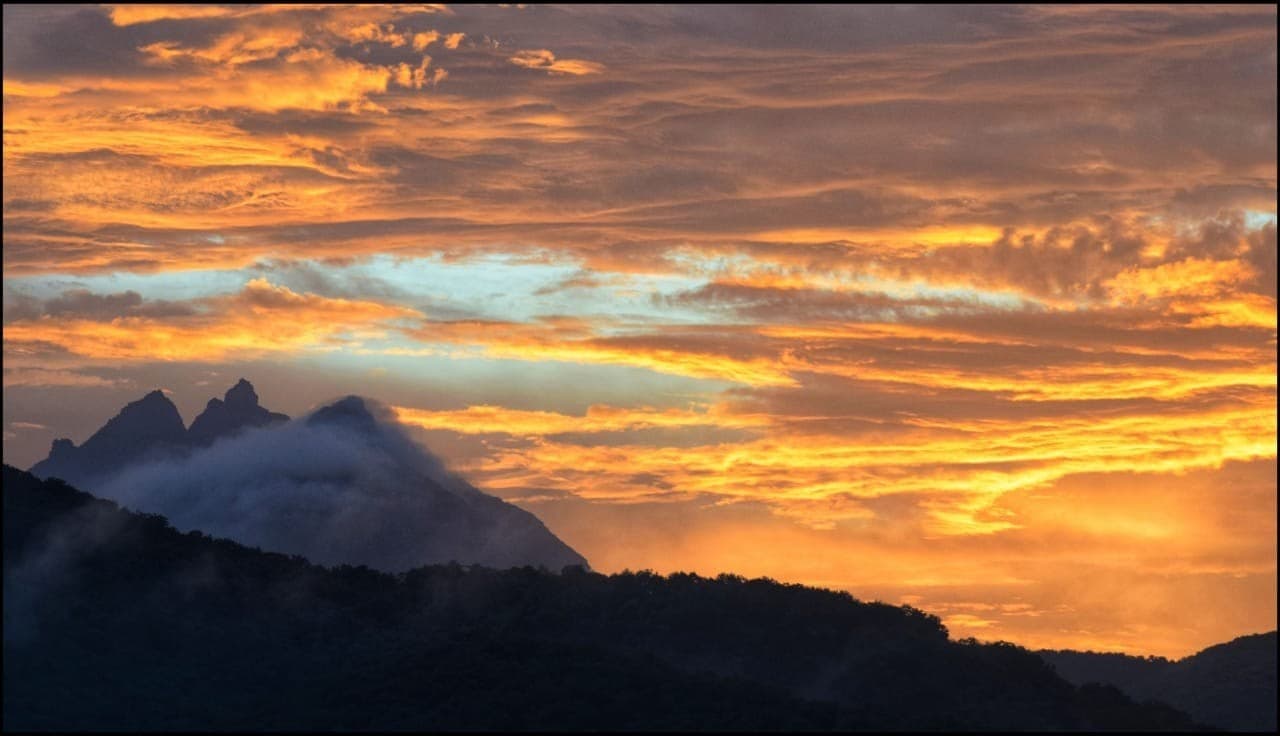
Rising above Junagadh, Girnar is a cluster of volcanic peaks sacred to Hindus and Jains. A stone stairway of around ten thousand steps leads past Jain temples, the Amba Mata temple and on to the Dattatreya peak. Pilgrims start the climb before dawn to avoid the heat.
If the full climb is not for you, the Girnar ropeway carries visitors from the foothills to the Amba Mata temple area in a few minutes, with sweeping views over the forest and plains. It is one of the longest temple ropeways in Asia and makes Girnar possible for families and older travellers. Queues can be long on weekends and festival days, so go early.
Girnar is busiest during the Bhavnath fair at Mahashivratri and the Lili Parikrama in the month of Kartik, when lakhs of pilgrims walk around the mountain.
Girnar Nature Safari
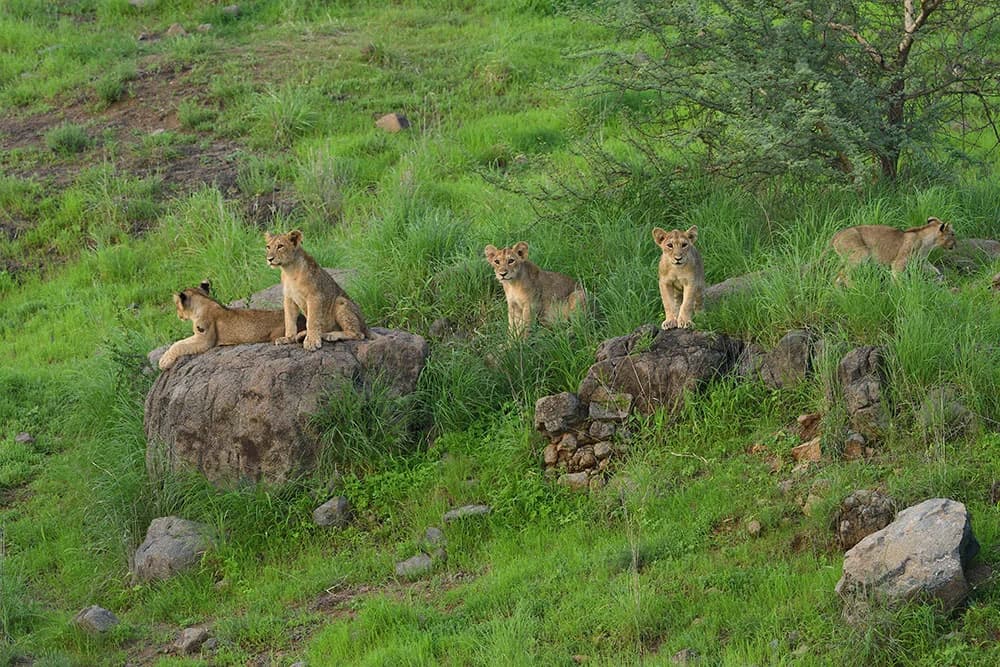
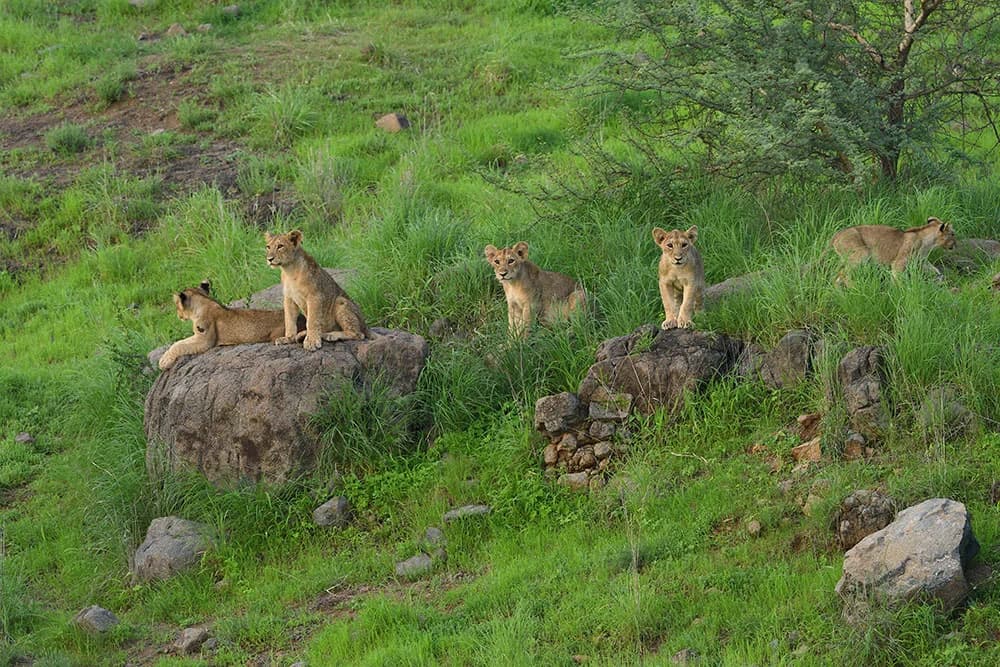
The forest around Girnar is a wildlife sanctuary in its own right, home to lions, leopards, deer and several species of vultures. A Gypsy safari here takes you through hilly terrain with the Girnar peaks as a backdrop — a different feel from the flatter forest around Sasan.
It is a good choice if you are staying in Junagadh, want a second safari without returning to Sasan, or simply want to see lions in a hill landscape. As with every safari in the region, a permit with your ID details is required and sightings depend on luck.
Diu: forts, churches and quiet beaches
Diu is a small island linked to the mainland by bridges, about 2.5 to 3 hours from Sasan. For more than four centuries it was a Portuguese territory, and that history shows in its whitewashed churches, narrow lanes and the massive Diu Fort, built in the 16th century on the edge of the sea.
Visit the elegant St Paul’s Church, the Naida Caves — a maze of rock passages with light falling through the openings — and the INS Khukri Memorial on a hill overlooking the sea. Gangeshwar Mahadev at Fudam has Shiva lingas set in the rocks that are washed by the waves at high tide.
For beaches, Nagoa is a calm, curved bay that is popular with families, while Ghoghla is long and open. Diu is a separate Union Territory, so carry your IDs.
Getting around Diu and where to stay
Diu is compact — about a dozen kilometres end to end — so it is easy to explore in a day. Rent a scooter or hire an auto-rickshaw for the morning, and walk the old town lanes around the fort and churches in the late afternoon when it is cooler.
Stay in Diu town if you like being close to the fort, cafes and the evening seafront, or near Nagoa if you want a beach holiday. October to March is the most pleasant time to visit; the monsoon brings rough seas and some beach activities stop.
Diu also has a small airport with limited flights, which makes it a convenient place to end a Saurashtra trip without driving back to Rajkot or Ahmedabad.
Tulsishyam hot springs
Tucked into a valley in the eastern part of the Gir landscape, Tulsishyam is known for its natural hot-water springs and an old temple dedicated to Lord Krishna. Pilgrims bathe in the warm kunds before visiting the temple, and there is a small Rukmini temple on the hill above.
The drive to Tulsishyam passes through forest and is part of the attraction — but it is long, so combine it with a trip towards Una or Diu rather than doing it as a return trip from Sasan. Drive only in daylight, as the road runs through wildlife habitat, and do not stop or get out of the car if you see animals near the road.
Kankai Mata and Banej: temples inside Gir
A handful of old temples sit deep inside the Gir sanctuary, and for local families they are as much a part of the forest as the lions. Kankai Mata is a revered goddess temple in the heart of the forest, and Banej is a small Shiva shrine beside a forest stream, famous across India because, for many years, its lone priest had a polling booth set up just for him at every election.
Because both lie inside the protected area, access is controlled by the forest department — usually limited to daylight hours, with entry rules for vehicles that change from time to time. If you would like to visit, ask your hotel or our team to check the current rules first, and never leave your vehicle except at the temple itself.
Satadhar and the countryside of Saurashtra
About an hour from Sasan, near Visavadar, Satadhar is a much-loved pilgrimage centre associated with the saint Aapa Giga. It is known for its tradition of serving free meals to every visitor, and a visit shows a side of Saurashtra that most tourists never see — farming villages, cattle herds and deep local faith.
On the way, you pass fields of groundnut, cotton and mango orchards. Gir is famous for its Kesar mangoes, and if you travel between May and June, roadside stalls sell them straight from the orchards. Ask your driver to stop — it is one of the simplest pleasures of a summer trip to Gir.
Veraval harbour and Chorwad
Veraval, next to Somnath, is one of the largest fishing harbours in Gujarat. Early in the morning the docks are busy with colourful boats unloading their catch, and nearby yards still build large wooden boats by hand — a craft passed down through generations.
Further along the coast, Chorwad has a long beach and the old seaside summer palace of the Nawabs of Junagadh. The sea here can be rough, so treat it as a place for a walk and the sunset rather than a swim. These coastal stops fit easily into a day that also includes Somnath.
Ambardi Safari Park near Dhari
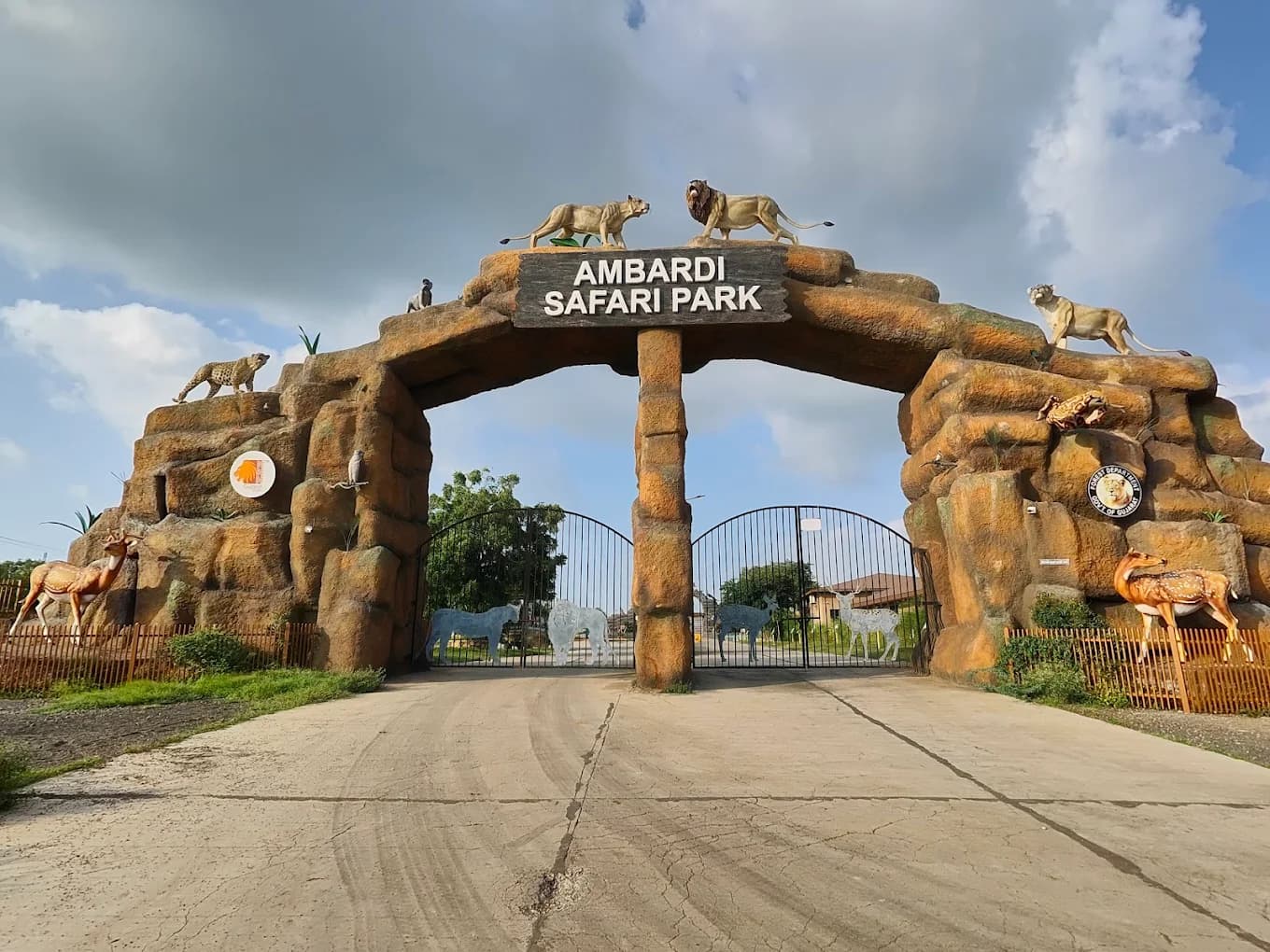
Ambardi is a lion interpretation zone near Dhari, about two hours east of Sasan. Its open, grassy habitat makes animals easy to see, and it is far less crowded than Devalia. Ambardi fits naturally into a route that also includes Bhavnagar, Palitana or Velavadar, so consider it when you are entering or leaving Saurashtra from the east.
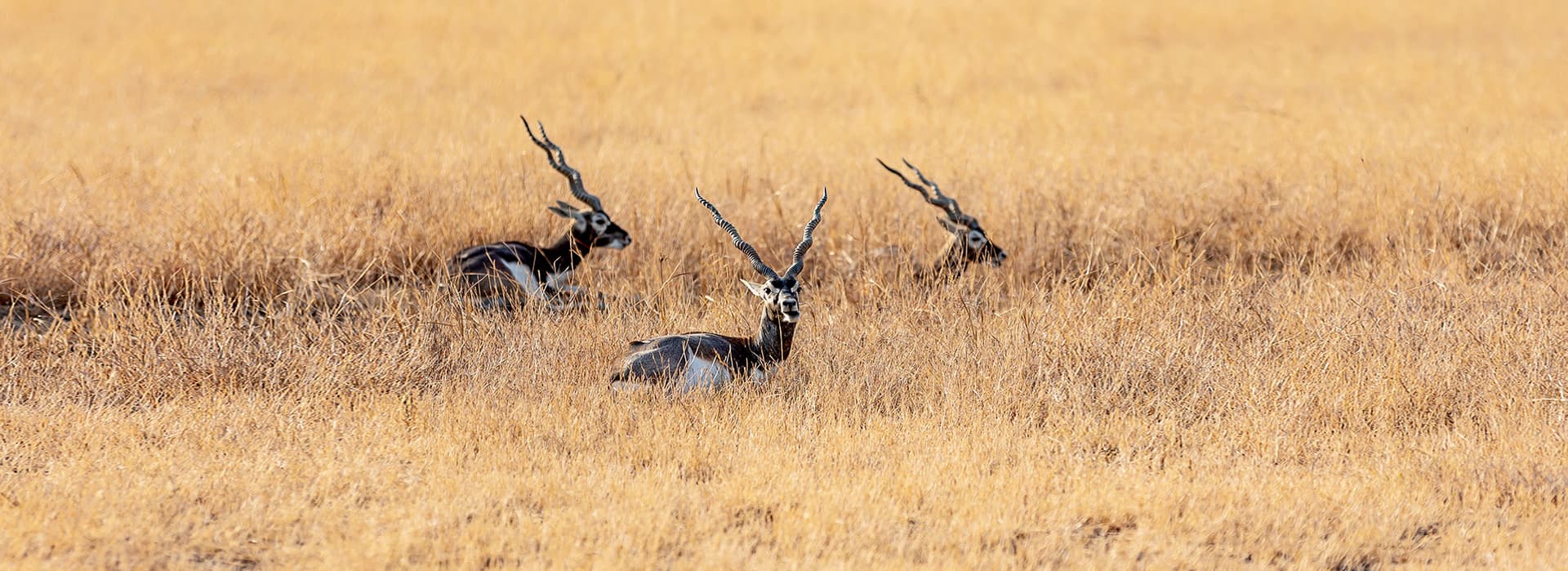
If you are travelling with children, Ambardi’s short drive and open views make it a good alternative to a long jungle trail. The countryside around Dhari is also lion territory, and the Velavadar blackbuck park near Bhavnagar makes a fine pairing for wildlife lovers who want to see two very different landscapes in one trip.
Madhavpur and Porbandar
If you are driving along the coast towards Dwarka, two stops are worth planning in. Madhavpur has a long, clean beach and the Madhavrai temple, and it hosts a colourful fair in spring that celebrates the wedding of Lord Krishna and Rukmini.
Porbandar, further west, is the birthplace of Mahatma Gandhi. Kirti Mandir, the memorial built next to his ancestral home, lets you walk through the rooms where he was born. Porbandar is roughly three hours from Sasan, so it works best as a stop between Somnath and Dwarka rather than a day trip.
What to eat around Gir
Saurashtra’s food is hearty and full of flavour. A traditional Kathiyawadi thali brings bajra rotla with white butter and jaggery, spicy sev tameta nu shaak, smoky ringan no olo, kadhi, khichdi and fresh chaas. Around Junagadh and Somnath, look for local snacks like ganthiya with fried chillies and papaya sambharo in the morning.
In mango season, Gir’s Kesar mangoes are the highlight of any meal. Most of the region is vegetarian, and food in temple towns like Somnath is usually strictly vegetarian, without onion and garlic in some places.
A five-day Gir, Somnath, Diu and Junagadh itinerary
- Day 1 — Rajkot to Junagadh: arrive in Rajkot, drive to Junagadh, visit Uparkot fort and the Mahabat Maqbara.
- Day 2 — Girnar and on to Sasan: take the Girnar ropeway in the morning, then drive to Sasan. Afternoon Devalia drive.
- Day 3 — Gir jungle trail and Somnath: first-slot safari, rest, then drive to Somnath for the evening aarti. Night in Somnath.
- Day 4 — Diu: visit Triveni Sangam and Bhalka Tirth in the morning, then drive to Diu. Sunset at the fort or Nagoa beach.
- Day 5 — Diu and departure: Naida Caves and St Paul’s Church, then fly out of Diu or drive back to Rajkot.
How to travel between these places
Public buses connect all the main towns, but a private cab with driver is by far the most practical way to combine several places in a few days. Roads between Sasan, Somnath, Junagadh and Diu are generally good, though the stretches through villages and forest are slower than the distances suggest.
Drive in daylight wherever possible, especially on roads that pass through forest. Fuel up in larger towns, and keep cash for small eateries and temple offerings.
Plan your Saurashtra trip with Prakriti Escapes
We put together Gujarat trips that combine Gir safaris with Somnath, Junagadh, Diu and Dwarka — with hotels, a cab and driver, and help with safari permits. Tell us your dates, starting city and interests on WhatsApp, and we will suggest a route that does not waste time on the road.
Planning the safari part? Read our Sasan Gir safari guide and how to reach Sasan Gir.
Experiences & trips in Sasan Gir
![]() EnquireDevalia Park Bus SafariA covered park-bus ride through Devalia, the Gir Interpretation Zone — the easiest and most economical way to see Gir's lions, ideal for families and seniors.
![]() EnquireGir Jungle SafariA three-hour open Gypsy drive with a forest guide through Gir National Park, the last wild home of the Asiatic lion. Look for lions, leopards, deer and over 300 kinds of birds.
![]() EnquireVelavadar National ParkA grassland safari in Velavadar Blackbuck National Park near Bhavnagar — herds of blackbuck, the elusive Indian wolf and a winter roost of migratory harriers.
![]() EnquireDevalia Park Gypsy SafariAn open Gypsy drive through Devalia, the Gir Interpretation Zone near Sasan — natural Gir habitat in a fenced area, with good chances of close lion views in under an hour.
![]() EnquireGirnar Nature SafariA three-hour open Gypsy safari in the hilly Girnar Wildlife Sanctuary beside Junagadh — lions, leopards, vultures on the cliffs and far fewer vehicles than Sasan.
Frequently asked questions
What are the best places to visit near Sasan Gir?
Somnath temple, Junagadh (Uparkot fort, Mahabat Maqbara and the Girnar ropeway), Diu, Devalia Safari Park, Tulsishyam and Satadhar are the most popular. Ambardi and the Girnar Nature Safari are good for a second safari.
How far is Somnath from Sasan Gir?
About 45 km by road via Talala, roughly an hour’s drive. You can visit after a morning safari and return to Sasan, or stay a night in Somnath.
Can I visit Somnath and Gir in one day?
Yes. Take a morning safari, rest, and drive to Somnath in the afternoon for the evening aarti. Either return to Sasan or stay overnight in Somnath.
How far is Diu from Sasan Gir?
Roughly 100–110 km, about 2.5 to 3 hours by road via Una. Diu works best as a one- or two-night stop at the end of a Gir trip.
Is the Girnar ropeway worth it?
Yes, especially for families and older travellers. It replaces thousands of steps with a short ride and gives wide views over the Girnar forest. Go early on weekends and festival days to avoid long queues.
Are phones allowed inside Somnath temple?
No. Mobile phones, cameras and bags are not allowed inside the temple. Use the deposit counters near the entrance before joining the darshan queue.
How many days do I need for Gir and nearby places?
Five days is comfortable for Sasan Gir, Somnath, Junagadh and Diu. With seven days you can add Dwarka or a second safari at Ambardi or Girnar.
Which is better for a beach break near Gir — Diu or Chorwad?
Diu, for most travellers. It has calmer bays like Nagoa, more places to stay and eat, and sights such as the fort and Naida Caves. Chorwad is good for a sunset walk, but the sea there is often rough.
When is the best time to visit Saurashtra?
October to March has the most comfortable weather for sightseeing. April to June is hot but good for safaris and Kesar mangoes. The Gir jungle trail is closed from mid-June to mid-October.
- #places to visit near sasan gir
- #somnath temple
- #junagadh
- #girnar ropeway
- #diu
- #saurashtra itinerary
Written by
Prakriti EscapesPrakriti Escapes is a private travel company from Surat, Gujarat. We arrange safaris, stays and trips — and write these guides from the questions our guests ask us most.
Updated 18 Oct 2026
Travel desk
Planning this trip?
Share your dates — we check availability and send options.