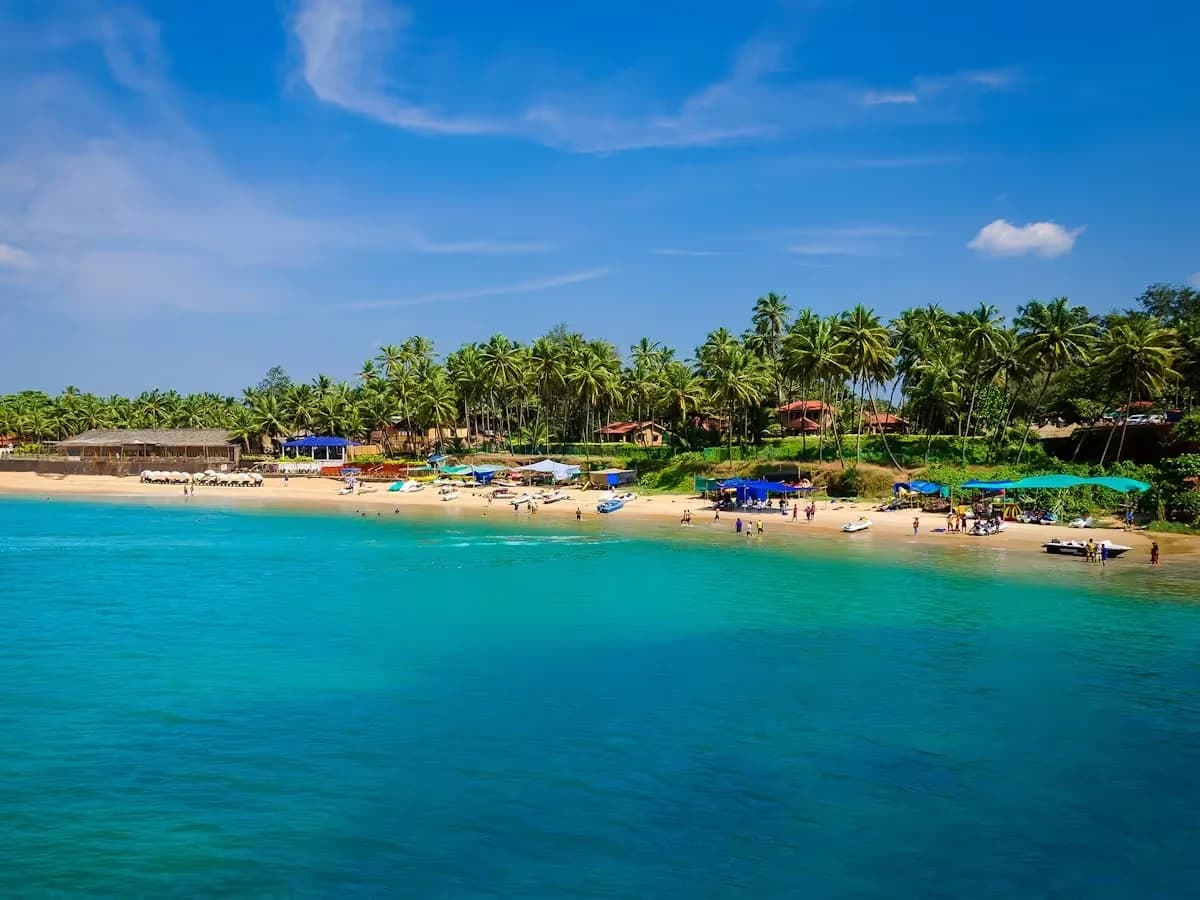
Dudhsagar is the day trip that shows you a completely different Goa. Instead of beaches and beach shacks, you head inland into the forests of the Western Ghats, bump along a jungle track in an open jeep, and stand beneath a waterfall that pours down a cliff in four great white tiers. It is a long day, but one that most travellers remember long after their beach days have blurred together. This guide explains how the trip works, when to go, what to wear, how to stay safe and how to choose the right tour.
What makes Dudhsagar special
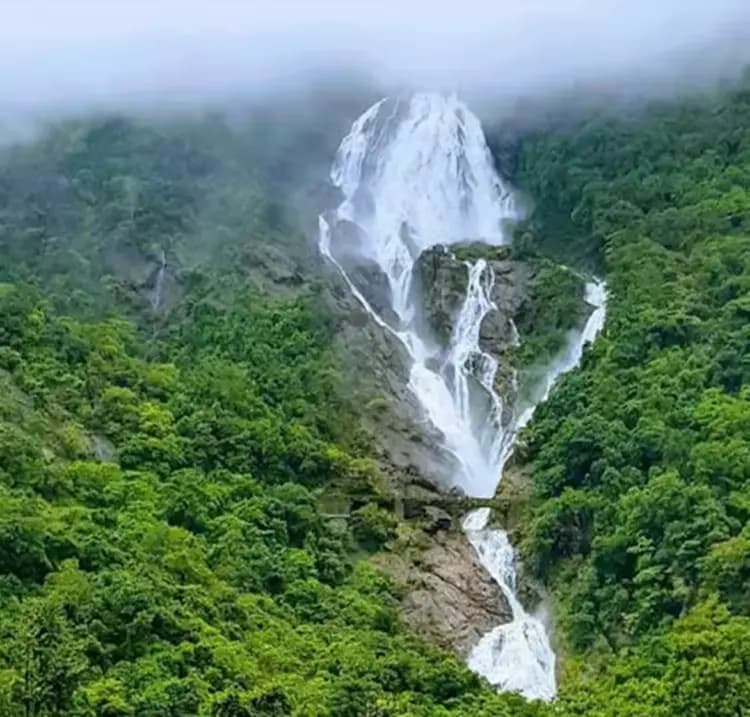
The name Dudhsagar means “sea of milk”, and once you see the falls you understand why. The Mandovi river, still young and fast in the hills, drops roughly 310 metres down a sheer rock face in four tiers, breaking into foaming white sheets that look like milk pouring through the forest. It is one of the tallest waterfalls in India.
What makes it even more striking is the setting. The falls are surrounded by thick tropical forest on every side, and a railway bridge crosses the face of the cliff partway down. When a train passes, framed by the white water and green hills, it is one of the most photographed scenes in India.
Unlike many waterfalls, Dudhsagar keeps flowing well after the monsoon, which is why it can be visited for much of the year.
Dudhsagar and the Bhagwan Mahavir Wildlife Sanctuary
Dudhsagar lies in the far east of Goa, in Sanguem taluka, right on the border with Karnataka. The falls sit inside the Bhagwan Mahavir Wildlife Sanctuary and Mollem National Park, the largest protected forest in Goa.
This is a rich and important part of the Western Ghats, one of the world’s great biodiversity regions. The forest is home to gaur, sambar, barking deer, Malabar giant squirrels, langurs and a long list of birds, including hornbills. Because it is a protected area, access is managed by the forest department, and visitors travel in registered jeeps on a fixed route.
The nearest village and starting point for most trips is Kulem (also spelled Collem), roughly 60 km from Panaji and 70 to 80 km from the North Goa beaches.
Best time to visit Dudhsagar
- October to December: often the best time. The jeep track usually reopens after the monsoon, the falls are still full and powerful, and the forest is lush and green.
- January to March: pleasant weather and a steady flow, though the falls slowly become thinner. A good, comfortable time for families.
- April to May: hot, with the lowest water levels of the year. The falls are smaller but still pretty, and the pool is calmer.
- June to September: the falls are at their most spectacular, but the jeep track is usually closed for safety during the peak monsoon.
Opening dates depend on the weather and the forest department’s decision each year, so check that jeep trips are running before you plan.
Can you visit Dudhsagar in the monsoon?
This is one of the most common questions — and the answer is usually no, at least not up close. Between roughly June and September the forest track becomes dangerous as streams swell and the ground turns to mud, so jeep trips are generally suspended.
Monsoon is also when the falls look their most dramatic. Some trains on the Londa–Vasco railway line pass right in front of the falls, and passengers get a brief, spectacular view from the windows. However, you cannot get off at the falls, and walking on or along the railway line is not permitted and very dangerous.
If you are in Goa during the monsoon, enjoy smaller, safe waterfalls on organised trips instead, and save Dudhsagar for after the rains.
How a Dudhsagar day trip works
Most travellers do Dudhsagar as a full-day tour with transport, the jeep safari and lunch included. Our coach tour follows a typical pattern:
- Early-morning pickup from the main roads of North Goa areas such as Baga, Calangute, Arpora, Candolim and the Panjim bus stand.
- Drive to Kulem, the starting point for the forest jeeps.
- Jeep safari of roughly 12 km through the forest and across several streams.
- Time at the falls, with life jackets for those who want to enter the pool when it is allowed.
- Spice plantation visit with a guided walk and a traditional Goan buffet lunch.
- Old Goa churches on the way back, before drop-off in the evening.
A typical Dudhsagar day, hour by hour
Exact times vary with the season, traffic and the jeep queue, but a coach tour usually looks something like this:
- Around 6 am: pickup from North Goa main roads. Have breakfast packed or eat on the way.
- Around 9 to 9:30 am: arrive at Kulem and board the forest jeeps.
- Around 10 to 11 am: time at the falls — viewing, photos and a swim if allowed.
- Around midday: jeep ride back to Kulem.
- Early afternoon: spice plantation walk and Goan buffet lunch.
- Late afternoon: Old Goa churches.
- Evening: drop-off back in North Goa.
It is a long day, so get a good night’s sleep before and keep the evening free.
The Kulem jeep safari
From Kulem, visitors transfer into open 4x4 jeeps run by registered local operators. The track to the falls is rough and rocky, and in the first months after the monsoon it crosses several streams — part of the adventure, and one reason the ride is so popular with children.
The jeep ride takes around 45 minutes to an hour each way, depending on the track and the queue of vehicles. Jeeps carry several passengers and follow a fixed route, and drivers know the forest well. Expect bumps and splashes, and hold on to bags and phones.
In peak season, there can be a wait at Kulem while jeeps are allotted in turn. Use the time to apply insect repellent, put valuables in a dry bag and visit the toilets — there are only basic facilities further along.
The last stretch is a short walk over uneven rocks to the viewing area and pool. It is manageable for most people, but wear proper footwear and take your time.
Swimming, viewpoints and time at Dudhsagar
Once you reach the base, you will usually have around an hour to enjoy the falls. The spray, the roar of the water and the sheer height of the cliff are impressive even from the edge of the pool.
Swimming is allowed only in the designated area and only when the forest department and guides consider it safe. Life jackets are compulsory, and you must stay within the marked limits — the pool is deep and the rocks are slippery. On some days, especially early in the season, swimming may not be allowed at all.
If you do not want to swim, find a rock away from the crowd and simply watch. The best photographs are often taken from a little further back, where you can fit the whole cascade and the railway bridge into the frame.
The spice plantation stop
After the falls, most tours stop at a spice plantation in the hills of central Goa. A guide walks you through the gardens, showing pepper vines climbing areca palms, cardamom, cinnamon, nutmeg, cloves, vanilla and turmeric, and explaining how each is grown and used.
The visit usually ends with a traditional Goan buffet lunch, often served on a banana leaf, with dishes such as dal, vegetable curries, fish or chicken curry and rice. Some plantations also offer optional extras such as a herbal drink or a small shop selling spices and cashews.
It is a relaxed, shaded break after the morning’s adventure, and a good chance to learn about the farming traditions of inland Goa.
Old Goa churches
Many Dudhsagar tours return via Old Goa, once the capital of Portuguese India. Its churches and convents are a UNESCO World Heritage Site, and two are especially worth seeing: the Basilica of Bom Jesus, which holds the mortal remains of St Francis Xavier, and the vast Sé Cathedral across the lawns.
Dress modestly, with shoulders and knees covered, as these are active places of worship. After a day in the forest, the calm of the great churches makes a peaceful end to the trip before the drive back to the beaches.
Going by tour vs going independently
A tour is the easiest option for most travellers. Transport, the jeep, forest entry, life jackets, a guide and lunch are arranged for you, and you do not need to worry about the jeep queue or directions. It also combines the spice farm and Old Goa in one day.
Going independently — by hired car or scooter to Kulem, then a shared jeep — gives you more flexibility, but you will need to handle the jeep booking and forest entry yourself, and queues can be long in peak season. The drive to Kulem is long and partly through hilly country, so start early.
For families, older travellers and first-time visitors to Goa, a tour is usually the better choice.
What to wear for Dudhsagar
- Quick-dry clothes — you are likely to get wet from spray, streams or the pool.
- Sports sandals or shoes with good grip for the jeep ride and the rocky walk. Avoid flip-flops and heels.
- Swimwear under your clothes if you plan to enter the pool, plus a change of clothes for afterwards.
- A cap and sunglasses for the jeep ride.
- Modest clothing for Old Goa — carry a light layer that covers your shoulders.
What to carry
- A small dry bag or zip-lock pouches for your phone, wallet and documents.
- A towel and a full change of clothes.
- Drinking water and a light snack for the morning.
- Photo ID for everyone in the group.
- Some cash for camera charges, drinks and small purchases — card payments may not be possible in the forest.
- Insect repellent, especially early in the season.
- Motion-sickness medicine if anyone needs it — the jeep track is very bumpy.
Wildlife and birds on the way
The jeep ride passes through the Bhagwan Mahavir Wildlife Sanctuary, so keep your eyes open. You may see langurs and macaques along the track, Malabar giant squirrels in the canopy, and with luck a gaur or barking deer in the undergrowth.
Birdlife is rich: listen for the loud calls of hornbills, and look for kingfishers by the streams, bulbuls, drongos and, in the early season, colourful butterflies everywhere. Larger animals such as leopards live here too but are rarely seen from the busy track.
Respect the forest — no loud music, no feeding animals and no littering.
Tambdi Surla, Mollem and the forests of eastern Goa
If you are travelling independently or on a private tour, consider adding Tambdi Surla Mahadev temple, a small 12th-century stone temple hidden in the forest. It is the oldest surviving temple in Goa and one of the few that survived the centuries of change on the coast.
The area around Mollem has nature trails and a forest interpretation centre, and the sanctuary is a good place for birdwatching. Some streams and gorges in the area look inviting but have strong currents and deep water, so swim only where it is clearly permitted.
These stops make for a longer day, so plan them with a private car rather than a fixed coach tour.
Responsible travel at Dudhsagar
Dudhsagar sees large numbers of visitors in the season, and the forest around it is fragile. A few simple habits make a real difference:
- Carry your rubbish back, including food wrappers and plastic bottles.
- Do not feed the monkeys. Feeding makes them aggressive and harms their health.
- Avoid soaps, shampoos and sunscreen in the pool — they pollute the water downstream.
- Keep noise down on the jeep track so wildlife is not disturbed.
- Support local operators and guides, whose livelihoods depend on the falls.
Dudhsagar with children and older travellers
Children usually love Dudhsagar — the jeep ride, the stream crossings and the huge waterfall make it feel like a real adventure. Keep small children close at the pool and on the rocks, and make sure they wear life jackets near the water.
For older travellers, the main challenge is the bumpy jeep ride and the short walk over uneven rocks. Anyone with back problems, recent surgery or limited mobility should think carefully before going, and pregnant travellers are best advised to skip the jeep ride.
The day starts early and finishes in the evening, so plan a quiet next day, especially with young children.
Photography tips for Dudhsagar
- Protect your gear. Spray reaches far from the falls — carry a lens cloth and a waterproof cover or pouch.
- Step back. A wider view that includes the cliff, forest and railway bridge tells the story better than a close-up.
- Include people for scale. A friend standing on a rock shows just how huge the falls are.
- Watch for trains. If a train crosses the bridge, be ready — it is the classic Dudhsagar shot.
- Camera charges may apply in the sanctuary and are usually paid on the spot.
Back to the beach
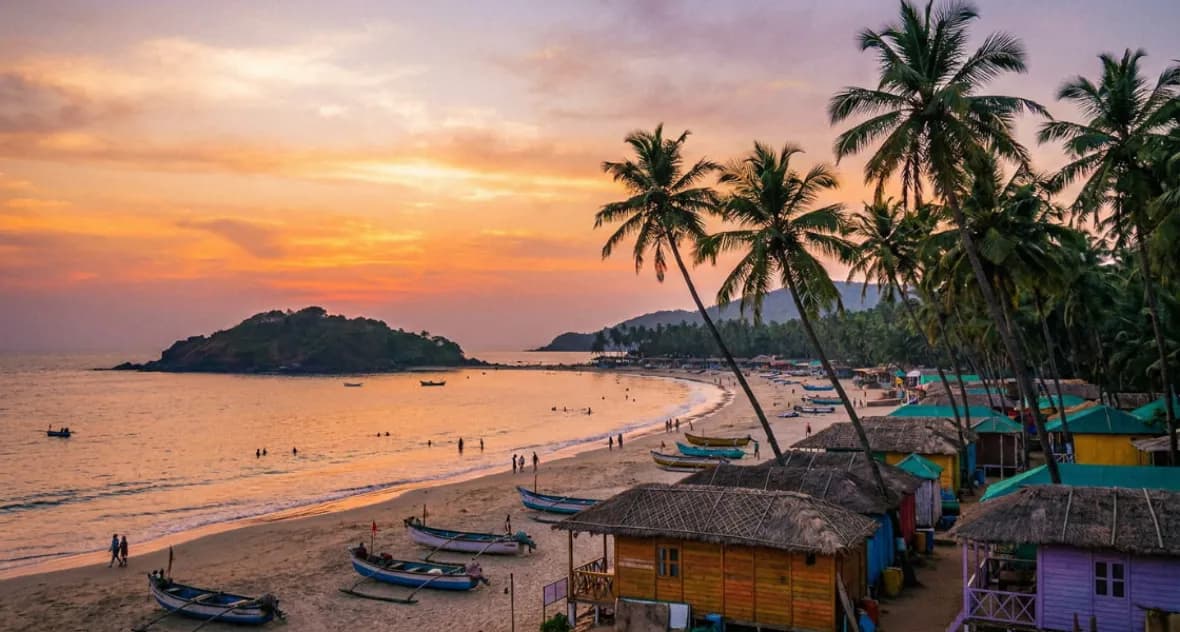
Most Dudhsagar tours return to North Goa in the evening, leaving time for a relaxed dinner and perhaps a walk on the beach at sunset. Keep the evening simple — it has been a long and active day.
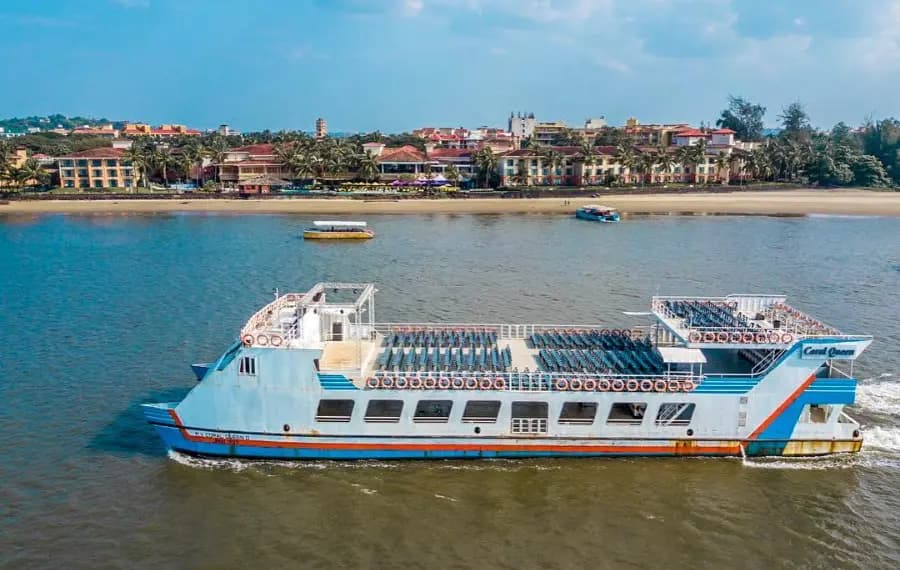
The next day is a good time for an easy beach day or a river cruise. See our Goa travel guide for ideas, or the Goa dinner cruise guide if you would like an evening on the Mandovi.
Booking your Dudhsagar trip with Prakriti Escapes
You can book our Dudhsagar Waterfall Trip online. It includes pickup and drop from North Goa hotel main roads by AC coach, a Hindi- and English-speaking guide, the jeep safari, forest entry, life jackets, a guided spice plantation tour with a Goan buffet lunch and a stop at Old Goa. Camera charges, drinks and personal expenses are not included.
The page shows the full itinerary and pickup points before you pay. Trips run only when the forest department allows jeeps on the track, so we will let you know if the season or weather affects your date.
Experiences & trips in Goa
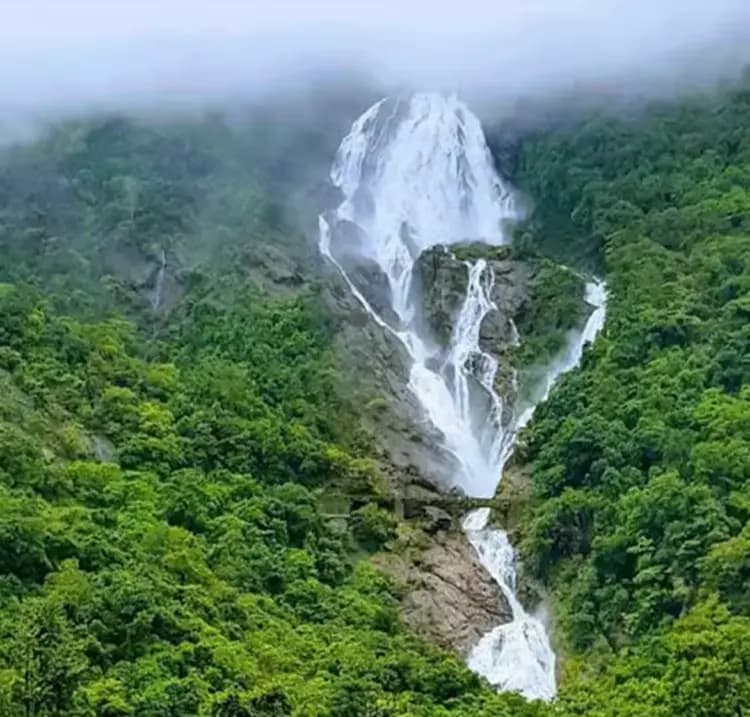 Book onlineDudhsagar Waterfall Trip by SIC CoachA full day from North Goa by AC coach: jeep ride to Dudhsagar falls, time at the pool, Goan buffet lunch at a spice plantation and Old Goa's churches.
 Book onlineVihaan Dinner Cruise in GoaA relaxed 2.5-hour dinner cruise on the Mandovi with buffet dinner, desserts and music, and shared AC coach pickup from North Goa.
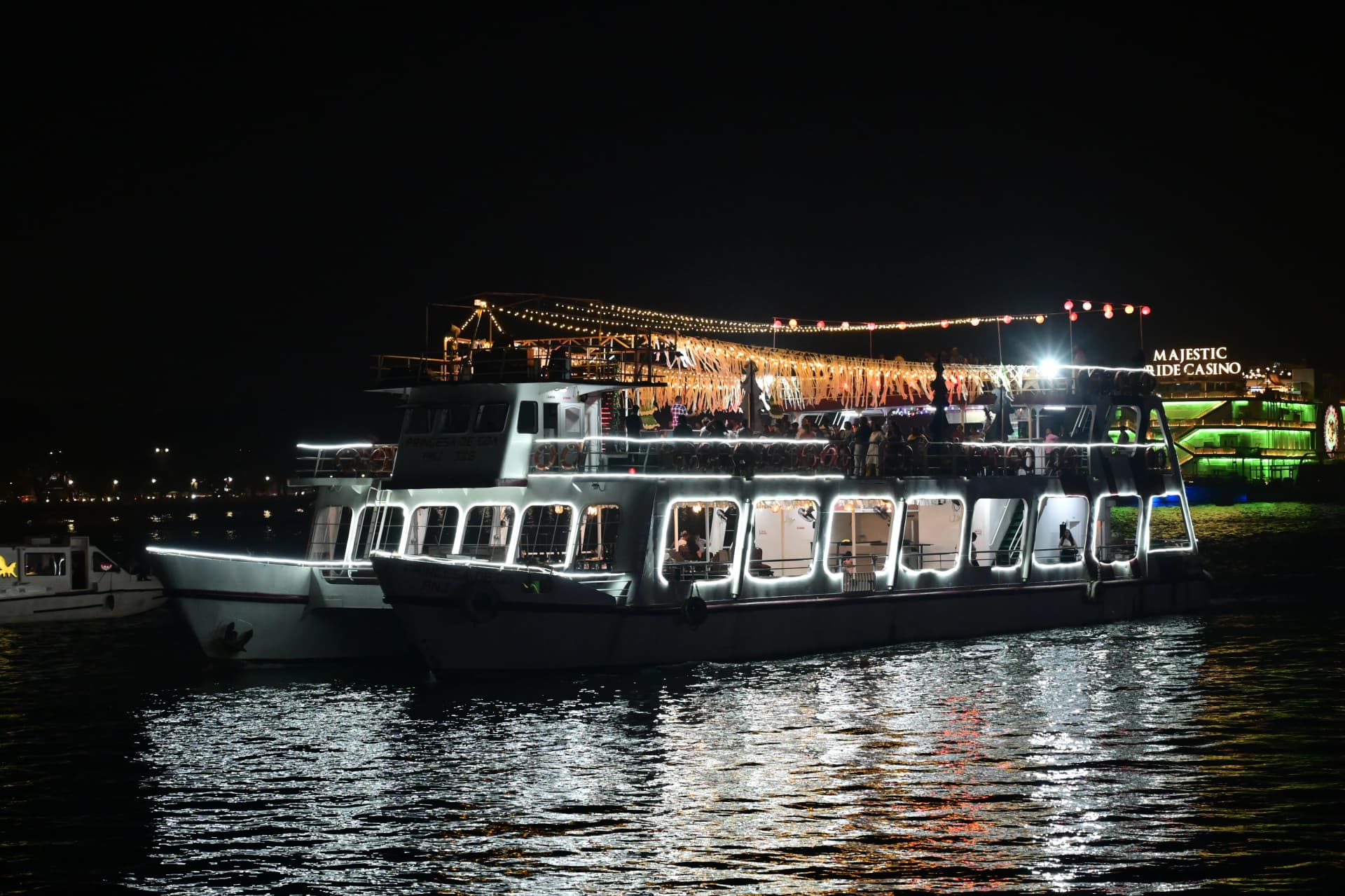 Book onlinePrincessa Dinner Party Cruise in GoaA lively dinner cruise on the Mandovi with a buffet, Bollywood DJ and games, plus AC coach pickup and drop from North Goa.
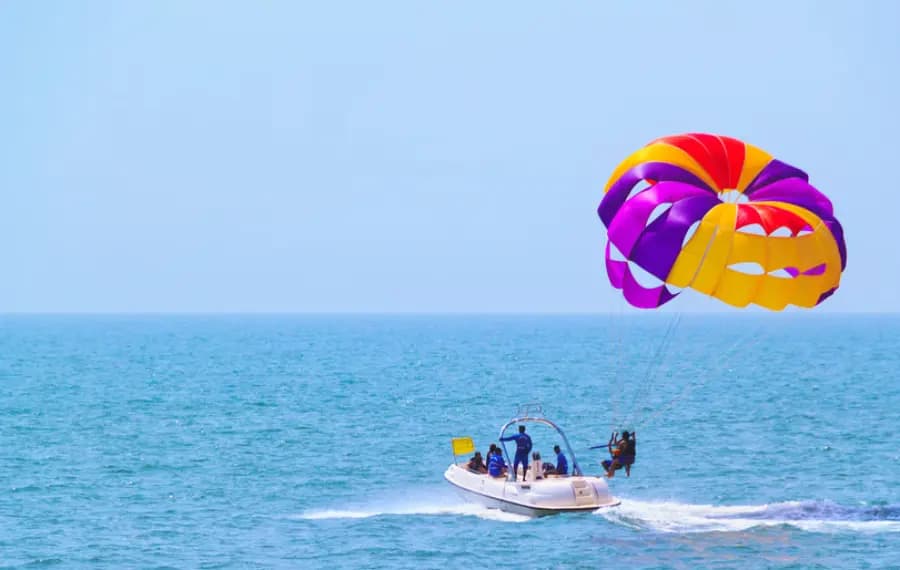 Book onlineWater Sports Combo in GoaFive beach activities in one booking — parasailing, jet ski, banana ride, bumper ride and speed boat — at Baga, Calangute or Vagator.
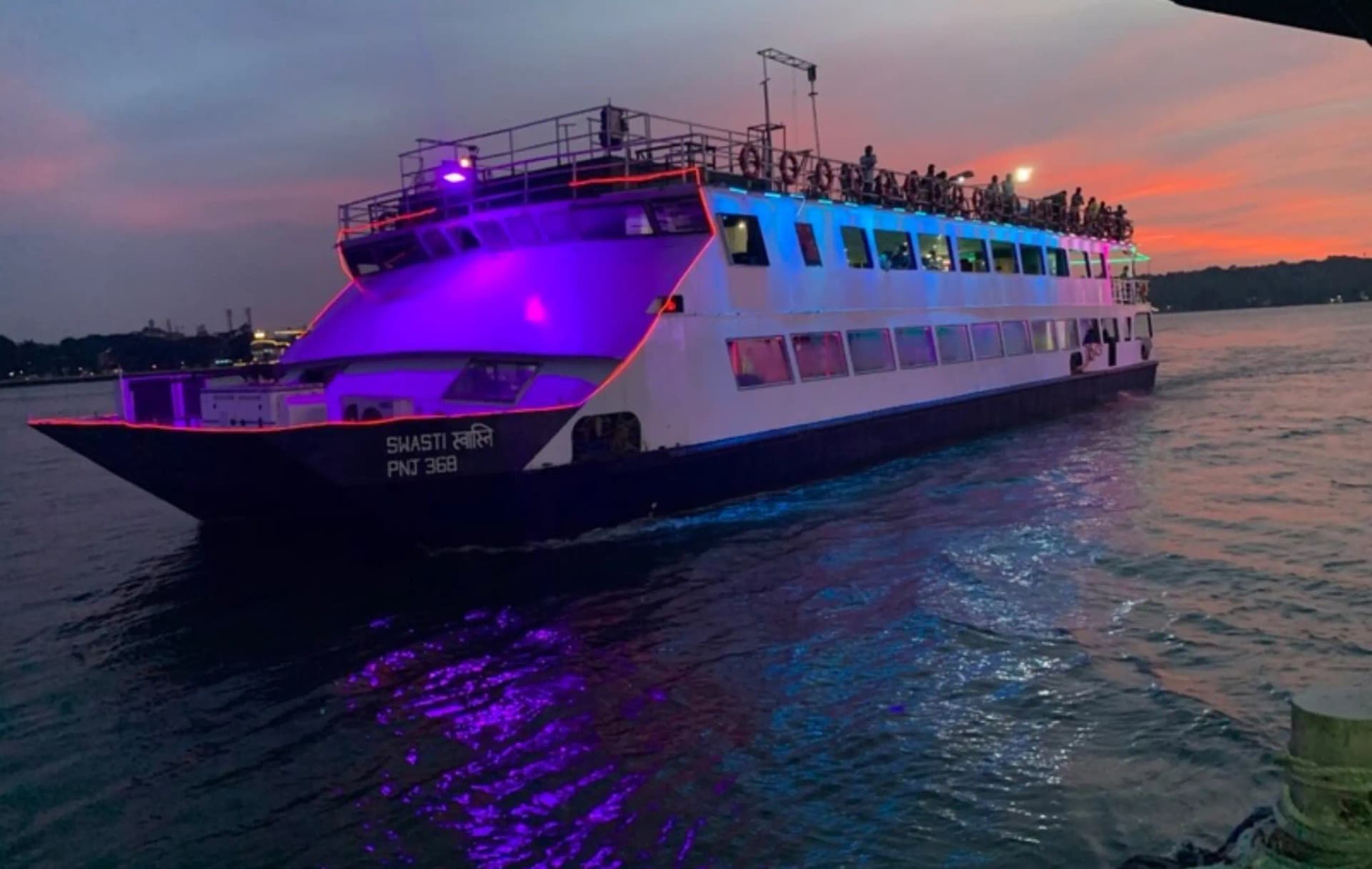 Book onlineSwastik Dinner Cruise in GoaA good-value 2.5-hour dinner cruise on the Mandovi with buffet dinner, desserts, Bollywood DJ and games, and shared AC pickup from North Goa.
Frequently asked questions
Is Dudhsagar open now?
Jeep trips to the falls usually run from around October to May and are generally suspended during the peak monsoon for safety. Opening dates depend on the weather and the forest department each year, so check before you plan.
How far is Dudhsagar from North Goa?
Kulem, the starting point for the jeep safari, is roughly 70 to 80 km from the North Goa beaches and about 60 km from Panaji. Including the jeep ride, plan for a full day.
How long is the jeep ride to Dudhsagar?
The jeep track from Kulem is roughly 12 km and takes around 45 minutes to an hour each way, depending on the track and the number of vehicles.
Can I swim at Dudhsagar?
Swimming is allowed only in the designated area, only when conditions are safe and only with a life jacket. On some days swimming may not be permitted at all.
Can I walk to Dudhsagar along the railway track?
No. Walking on or along the railway line is not permitted and is dangerous because trains use the line. Always use the jeep route from Kulem.
Is the Dudhsagar trip suitable for children?
Yes, most children love it. Keep them close at the pool and on the rocks and make sure they wear life jackets near the water. The jeep ride is bumpy, so very young children should sit on a parent’s lap or between adults.
What should I wear to Dudhsagar?
Quick-dry clothes, sports sandals or shoes with good grip, and swimwear under your clothes if you plan to swim. Carry a change of clothes and a light layer for the Old Goa church visit.
Can I see Dudhsagar from a train?
Some trains on the Londa–Vasco line pass right in front of the falls, giving a brief view from the window, especially during the monsoon. You cannot get off at the falls.
Is Dudhsagar worth visiting in April and May?
Yes, if you set the right expectations. The falls are thinner at the end of the dry season, but the forest jeep ride, the pool and the spice plantation still make an enjoyable day, and the water is usually calmer for a swim when it is allowed.
What is included in the Dudhsagar tour?
Our tour includes AC coach pickup and drop from North Goa hotel main roads, a guide, the jeep safari, forest entry, life jackets, a spice plantation tour with Goan buffet lunch and an Old Goa stop. Camera charges, drinks and personal expenses are extra.
- #dudhsagar waterfall
- #dudhsagar jeep safari
- #goa day trip
- #bhagwan mahavir wildlife sanctuary
- #kulem
- #goa waterfalls
Written by
Prakriti Escapes Editorial
Prakriti Escapes is a private travel company from Surat, Gujarat. We arrange safaris, stays and trips — and write these guides from the questions our guests ask us most.
Updated 14 Oct 2026
Travel desk
Planning this trip?
Share your dates — we check availability and send options.